
If your business uses, stores, or handles hazardous substances, COSHH regulations are something you need to understand. Whether you work in construction, manufacturing, cleaning, or any number of other industries, the law is clear, you have a duty to protect your workers from the risks that come with hazardous chemicals and materials.
Getting it right is not just about ticking boxes, it’s about keeping people safe, staying on the right side of the law, and making sure your business runs without costly interruptions.
We cover everything you need to know, from what COSHH actually means and what it covers, to how to carry out a proper risk assessment and choose the right storage solution for your site.
What is COSHH?
COSHH stands for the Control of Substances Hazardous to Health. It is a set of UK regulations designed to protect people from the risks associated with hazardous substances in the workplace.
In health and safety terms, that means taking proactive steps to identify dangers, assess risks, and put the right control measures in place before anyone gets hurt. The regulations require businesses to look at what they do, identify any substances that could cause harm, and then decide how to prevent or reduce workers’ exposure to them. That might mean switching to a safer alternative material, changing how a task is carried out, or putting proper storage and protective equipment in place.
In simple terms, COSHH requires businesses to identify substances that could cause harm, understand the risks they pose and put control measures in place to reduce or eliminate those risks.
What does COSHH cover?
COSHH is not just about chemicals, it’s far broader than many people realise. It covers a huge range of substances that workers come into contact with every day that can affect health, including liquids, dust, fumes and biological agents. The focus is on managing exposure and preventing harm through practical steps such as safe handling, proper storage and clear procedures.
Exposure to these substances can cause various health issues. Some effects are immediate, like skin irritation or asthma attacks from breathing in fumes. Other risks are long term, such as organ damage or cancer developing after years of low level exposure.
Substances hazardous to health
These can include everyday materials as well as industrial chemicals. Examples include cleaning products, solvents, fuels, adhesives, vapours, mists, nanotechnology, gases, paints and dust created during work processes. If a substance can harm health through inhalation, skin contact or ingestion, it is likely covered by COSHH.
Does COSHH cover asbestos?
Asbestos is not covered under COSHH. It’s regulated separately under the Control of Asbestos Regulations due to its specific risks and requirements. However, the general principles of risk assessment and control still apply to managing asbestos safely.
COSHH regulations and legal requirements
COSHH is not guidance or best practice, it’s a legal framework that businesses must follow when working with hazardous substances. The regulations set out clear, enforceable requirements for how businesses must manage hazardous substances, and the consequences of getting it wrong can be serious.
The Control of Substances Hazardous to Health Regulations 2002
This is the core piece of legislation. It outlines exactly what employers must do to protect their staff. These regulations require employers to assess risks, control exposure and ensure safe storage and handling of hazardous materials. They also cover monitoring, health surveillance where necessary and emergency procedures.
The role of HSE in COSHH compliance
The Health and Safety Executive (HSE) is the national independent watchdog for work related health, safety, and illness. They provide guidance on COSHH and enforce compliance across UK workplaces. They also carry out inspections and can take action if regulations are not being followed, including issuing fines or stopping unsafe operations.
Who is responsible for managing hazardous substances?
Employers carry the primary legal responsibility. This includes carrying out risk assessments, providing training and putting the right controls in place. However, employees also have a responsibility to follow procedures, use the control measures provided, and report any issues or defects in safety equipment.
Why managing hazardous substances is important
Managing hazardous substances properly is essential for keeping people safe and maintaining a compliant workplace. Without the right controls in place, even routine tasks can expose staff to unnecessary risks.
COSHH regulations are designed to minimise these risks, but effective management comes down to how substances are handled, stored and monitored day to day.
Protecting people from chemical exposure
The main goal is to keep people safe. Proper management prevents acute injuries like burns and chronic illnesses like occupational asthma or dermatitis.
Exposure to hazardous substances can happen in several ways, including inhalation, skin contact or accidental ingestion. Even low-level exposure over time can lead to serious health issues, particularly when dealing with fumes, dust or toxic chemicals.
Proper handling and storage significantly reduce these risks. Using clearly labelled containers, appropriate personal protective equipment and designated storage areas helps limit exposure and keeps substances contained.
Reducing risks and maintaining compliance
Following COSHH regulations is not just about meeting legal requirements, it also helps prevent avoidable incidents that can disrupt operations and put people at risk.
Poor control of hazardous substances can lead to spills, fires or contamination, all of which can result in downtime and costly clean-up. In more serious cases, it can lead to enforcement action and fines.
By putting the right procedures and storage solutions in place, you reduce the likelihood of incidents while demonstrating that your business is taking a responsible and compliant approach to health and safety.
What is a COSHH risk assessment?
A COSHH risk assessment is a structured process used to identify hazardous substances in the workplace, evaluate the risks they pose, and decide what steps you need to take to protect your workers. It forms a core part of COSHH compliance and helps ensure that anyone working with or around hazardous materials is protected.
Rather than being a one-off task, a COSHH assessment should reflect how substances are actually used on site. It should consider day-to-day handling, storage conditions and what could go wrong if controls are not in place.
What a risk assessment should include
A thorough COSHH risk assessment should clearly set out:
- The substance being used and its hazardous properties
- How exposure could occur, such as through inhalation, skin contact or spills
- Who may be at risk, including employees, contractors or visitors
- The level of risk involved, based on how the substance is used
- Control measures in place, such as ventilation, PPE or secure storage
- Emergency procedures, including what to do in the event of a spill or exposure
Supporting documents, such as safety data sheets, should also be referenced to ensure all relevant information is considered.
How often should a COSHH assessment be reviewed?
COSHH risk assessments are not a one time task, they should be reviewed regularly. As a general rule, they should be updated whenever there is a change that could affect risk levels.
This includes:
- Introducing new substances
- Changes to processes or working methods
- New equipment or storage arrangements
- After an incident or near miss
Even without changes, it is good practice to review assessments periodically to ensure control measures are still appropriate and being followed correctly.
COSHH signs, symbols and labels
Proper signage, labelling, and documentation are a core part of COSHH compliance. They make sure that anyone who comes into contact with a hazardous substance knows exactly what they are dealing with, what the risks are, and what precautions to take.
Without proper labelling, hazardous materials can be easily misidentified or misused, increasing the risk of accidents. Consistent and visible labelling across your site helps staff understand what they are dealing with and what precautions are required.
Hazard symbols and their meanings
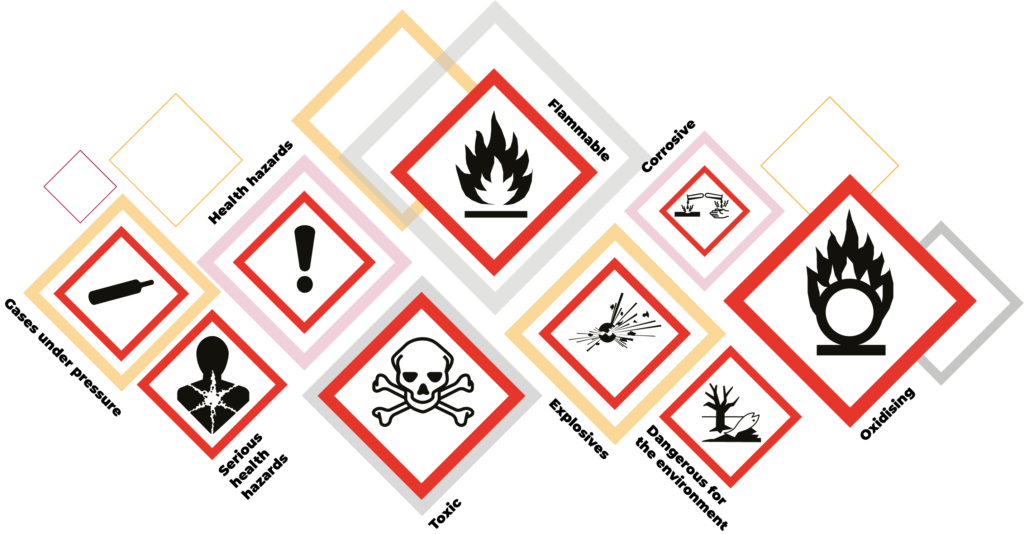
Standardised symbols are used globally to warn of dangers. They are designed to quickly communicate the type of risk a substance presents using pictograms that give a clear visual warning if a substance is toxic, flammable, corrosive, or a health hazard. This allows staff to take appropriate precautions before handling the material.
Common examples include:
- Flammable substances
- Toxic or harmful chemicals
- Corrosive materials
- Substances that pose environmental risks
Workplace signage and labelling requirements
All containers holding hazardous substances must be clearly labelled. Labels should include key information such as the substance name, hazard warnings and any handling instructions.
Workplace signage should also indicate areas where hazardous materials are stored or used, warning staff of the potential dangers and required precautions. This helps prevent unauthorised access and ensures that anyone entering the area is aware of potential risks.
Safety data sheets and chemical information
Safety data sheets (SDS) provide detailed information about each hazardous substance. They include detailed information about the hazards, safe handling procedures, proper storage requirements, first aid measures and what to do in an emergency. These documents should be easily accessible to anyone working with or near hazardous substances.
COSHH storage requirements for hazardous substances
How you store hazardous substances is one of the most important aspects of COSHH compliance. Poor storage is one of the most common causes of chemical accidents in the workplace, and it is an area that the HSE takes seriously. The right storage solution protects your workers, your site, and the environment.
COSHH storage regulations and guidance
The HSE provides clear guidance on how to store dangerous materials safely. The general principle is to minimise the quantity stored, keep incompatible substances apart, and ensure the storage area is secure, well ventilated, and capable of containing spills.
Safe storage of chemicals and materials
COSHH regulations require hazardous substances to be stored safely to prevent spills, contamination and unauthorised access. Storage units should be clearly identified, well ventilated and designed to contain any leaks.
There are several storage options depending on the type and volume of substances you need to store:
- COSHH bins for smaller quantities
- Storage cabinets for indoor use
- COSHH chemical storage containers for larger volumes and outdoor environments
For many sites, containers provide the most practical solution. They offer secure, dedicated storage that keeps hazardous materials separate from general operations.
Risks of poor storage and handling
Storing chemicals incorrectly is a major hazard. It can lead to leaks and spills, fires, harm to staff or the public, environmental contamination, or toxic reactions if incompatible materials mix. Poor storage also increases the risk of unauthorised access and accidental exposure.
Why use COSHH chemical storage containers?
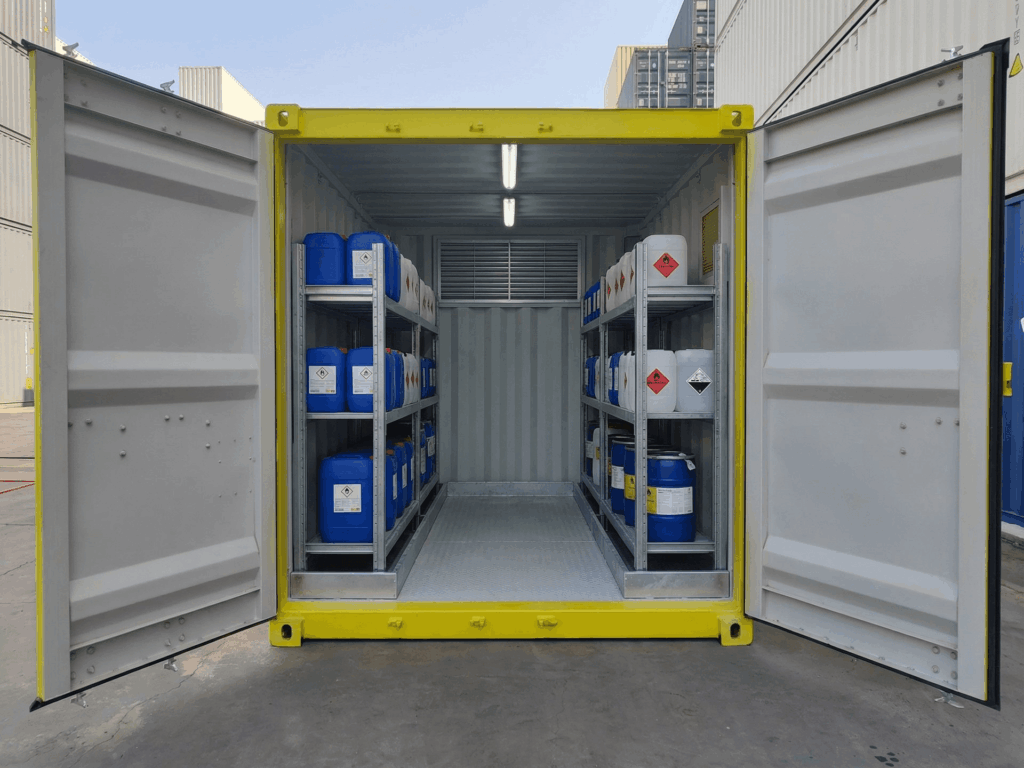
When it comes to storing hazardous substances safely, a purpose built COSHH container is one of the most practical and compliant solutions available. Whether you are managing a construction site, running a manufacturing facility, or operating a commercial premises, a specialised chemical store container gives you a secure, self contained space that is designed from the ground up for chemical storage.
What is a COSHH container?
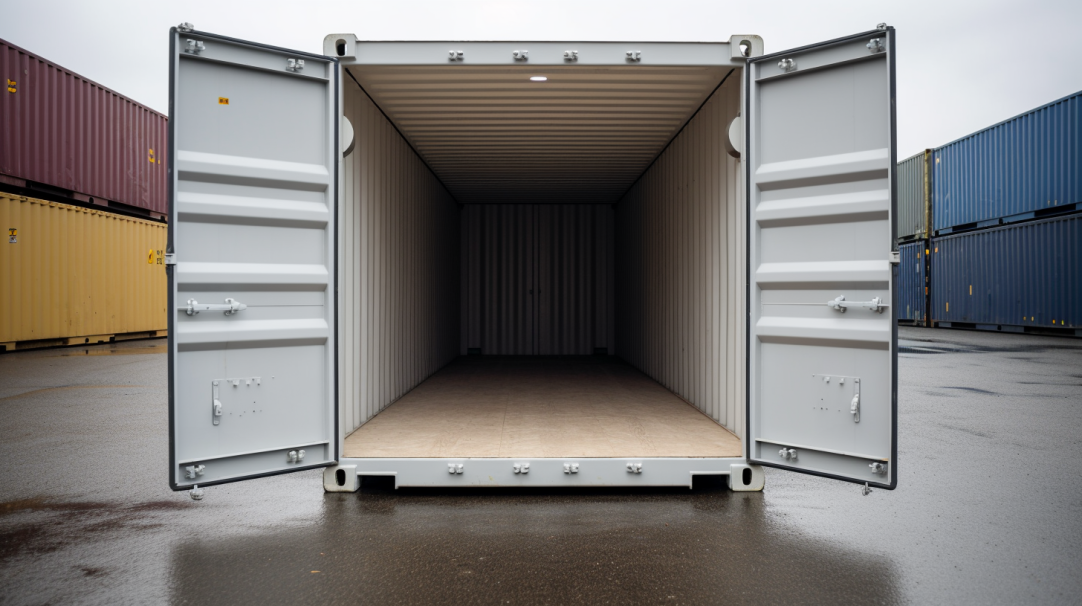
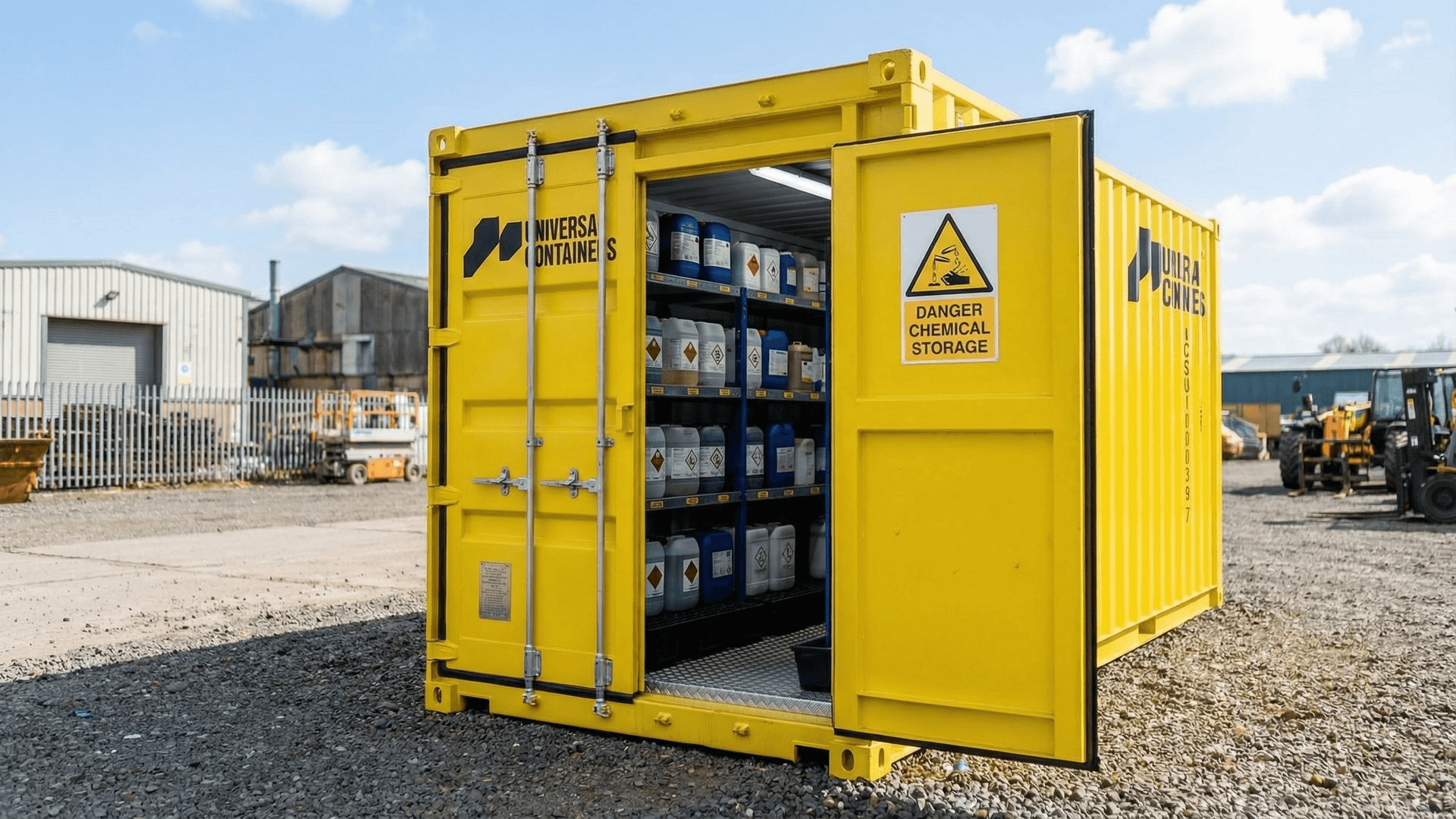
A COSHH container is a specialised storage unit, typically adapted from a shipping container, designed for the safe and compliant storage of hazardous materials. Unlike standard sheds or indoor cupboards, these units are built to meet strict safety requirements.
Benefits of COSHH storage containers for hazardous materials
These containers provide a secure, dedicated space for hazardous chemicals, keeping them separate from the main workspace and reducing risk to staff. They also protect the environment by containing any potential spills or leaks fully inside the container.
Compared to smaller storage options, COSHH containers offer:
- Secure, lockable access to prevent unauthorised entry
- Bunded flooring to contain leaks and spills
- Raised thresholds or door upstands to help contain liquids
- Built-in ventilation to reduce the build-up of fumes
- Weather-resistant construction for outdoor use
- Clear separation of hazardous materials from other operations
They are particularly useful on construction sites, industrial facilities and any location where larger volumes of chemicals need to be stored safely and in line with regulations.
Choosing the right chemical storage container
Every site operates differently and choosing the right COSHH storage container for your site takes a bit of thought. The size, specification, and layout all need to match the substances you’re storing and the environment you’re working in.
COSHH Container sizes and capacities
Choosing the right container size is one of the most important decisions when planning COSHH storage. If the container is too small, storage can become cramped and harder to manage safely. On the other hand, if it’s too large, it may be taking up more space than necessary. The goal is to choose a size that provides enough capacity while still allowing safe, organised access to all materials.
COSHH containers are typically available in a range of standard sizes:
- 9ft containers for smaller sites or limited storage needs
- 10ft containers as a compact, flexible option
- 20ft containers for higher volumes or bulk storage
For more specific requirements, containers can also be adapted or built to bespoke sizes. This is useful if you need to fit within a restricted space or accommodate larger quantities of hazardous materials.
Not sure which size COSHH container you need or what features to look for? Watch our walkthrough below to see exactly how our units are built and what comes as standard.
Matching storage to your site requirements
Choosing the right container is not just about size. It also needs to fit how your site operates day to day. A container that works well in practice will make handling safer, reduce disruption and help keep everything organised.
Start by thinking about where the container will be located. It should be easy to access but positioned away from busy working areas where possible. This helps reduce the risk of accidental contact while still allowing materials to be stored and retrieved efficiently.
You should also consider how the container will be used throughout the day. If substances are accessed regularly, you will need enough internal space to move safely and handle materials without obstruction. For less frequent use, a more compact setup may be suitable.
It is also important to match the internal layout to the type of materials being stored. Larger drums or bulk containers will require more space and clear access,while smaller items can be organised more efficiently using racking and shelving to prevent clutter and improve visibility.
Key points to consider include:
- Where the container will be positioned on site
- How often materials need to be accessed
- The amount of space needed for safe handling
- The size and quantity of items being stored
COSHH containers for different industries
Chemical storage containers are used across a wide range of industries, but the way they are used can vary depending on the type of site and materials involved. Common use cases include:
- Construction sites
Used to store fuels, paints and chemicals in a secure, weather-resistant unit, keeping hazardous materials contained and away from active work areas. - Manufacturing and industrial facilities
Provide a controlled space for storing larger volumes of chemicals, helping to keep production areas organised and reduce exposure risks. - Facilities management
Ideal for storing cleaning products and maintenance supplies, keeping them secure and preventing clutter in internal spaces. - Warehousing and logistics
Suitable for bulk storage of hazardous materials, particularly where outdoor storage is more practical and space needs to be managed efficiently.
Safe handling of hazardous substances and workplace best practices
Storage is only part of the picture. How your team handles hazardous substances on a day to day basis is just as important. Good habits, proper training, and the right controls in place all work together to keep people safe and keep your business compliant.
Control measures and protective equipment
Always try to eliminate the hazard first or substitute it with a safer alternative. If that is not possible, use engineering controls like local exhaust ventilation. Personal protective equipment (PPE) like gloves and masks should be the last line of defence.
Training and COSHH awareness
Providing the right equipment is only half the job. Staff must be trained on the risks, how to use the control measures, and what to do in an emergency. Regular awareness sessions keep safety top of mind.
Keeping records and documentation up to date
Maintain an accurate COSHH register listing all hazardous substances on site. Keep your risk assessments, safety data sheets, and training records organised and easily accessible.
Common mistakes when managing hazardous substances
Even businesses with the best intentions can fall short when it comes to COSHH regulations. Some mistakes are easy to make and easy to miss until something goes wrong. These are the most common ones to watch out for:
- Poor storage and containment. Using inappropriate storage, like keeping chemicals in unmarked bottles or standard cupboards, is a frequent and dangerous mistake. It easily leads to spills and confusion.
- Missing labels or unclear documentation. If a label is damaged or missing, the substance becomes an unknown hazard. Relying on memory or guesswork can often cause accidents.
- Outdated or incomplete risk assessments. Failing to update assessments when processes change means you are no longer controlling the real risks.
The bottom line
COSHH regulations exist for a reason. They protect people, reduce risk, and give businesses a clear framework for managing hazardous substances responsibly. Whether you are starting from scratch or reviewing your current approach, the principles are the same: know what you are dealing with, assess the risks, put the right controls in place, and make sure your storage is up to the job.
Managing hazardous substances is a legal and moral obligation. It requires identifying risks, implementing control measures, providing training, and ensuring safe storage.
FAQs
Are all chemicals covered by COSHH?
Most hazardous chemicals are covered, but specific materials like asbestos and lead have their own separate regulations.
Does COSHH apply to small businesses?
Yes, COSHH applies to all businesses, regardless of size, if they use or store hazardous substances. Even small amounts of chemicals must be assessed and managed safely.
What happens if you do not comply with COSHH regulations?
Failure to comply can lead to enforcement action from the Health and Safety Executive (HSE), including fines, prosecution or stopping work. It also increases the risk of accidents, injuries and long-term health issues.
What is the best way to store hazardous substances?
Hazardous substances should be stored in a secure, well-ventilated and clearly labelled area designed to contain spills and prevent unauthorised access. For larger quantities, COSHH chemical storage containers provide a practical and compliant solution.
Looking for a completely custom solution?
We have a wide range of base containers that can be customised to your needs, however we
realise
that
sometimes you need something completely ‘Outside the box’.
Contact us and one of our experts will be in touch to help design the container of your
dreams