
We’ve been in the container business for over 40 years, and we can’t recall a time when this many cost pressures have hit the market at once. If you’re looking to buy a container in the UK, prices are expected to rise, and timing is becoming increasingly important. We take a closer look at the global factors driving these increases and what to expect next.
Key Takeaways:
- Multiple cost pressures are hitting at once, including steel tariffs, disrupted shipping routes and rising fuel costs, all pushing UK container prices up.
- Containers currently in UK depots were bought before these changes, but replacement stock will reflect the new, higher costs.
- New 20ft and 40ft containers will see the biggest price increases, while specialist units face longer lead times and limited availability.
- Used containers offer the most price stability in the short term, as they avoid new shipping and tariff-related costs.
- If you’re planning to buy, acting now gives you the best chance to secure current pricing before the prices increase.
What’s Driving Container Prices Up in 2026
The container market hasn’t had a quiet month since late 2024, but April 2026 is different. Rising steel costs, ongoing shipping disruptions and increasing freight rates are all hitting at once, creating upward pressure on container costs.
Steel Tariffs Are Hitting Manufacturing Costs

US Section 232 tariffs on steel and aluminium have been sitting at 50% since June 2025. But on 6 April 2026, the rules changed again. Those tariffs now apply to the full customs value of finished products, not just the metal content. There’s no exception for goods already in transit, either.
Why does that matter for containers? Shipping containers are made from Corten steel. The raw material that goes into every box just got dramatically more expensive for manufacturers. Chinese and South-East Asian factories, where most new containers are built, are already adjusting their pricing. UK suppliers who reorder stock in the coming weeks will pay more for it, and those costs get passed on.
More expensive steel means more expensive containers, and those increases are likely to reach UK retail pricing within weeks, not months.
Middle East Tensions and the Strait of Hormuz
The Strait of Hormuz has been effectively closed to normal shipping since late February 2026. A brief ceasefire in early April raised hopes, but it collapsed within days when US-Iran talks failed. The US has since declared a naval blockade of Iranian ports, and carriers are treating the strait as a no-go zone. Ships that do attempt transit need Iranian approval, insurance premiums have surged, and routes through the region are slow and risky.
Maersk has introduced emergency fuel surcharges of $200 (£148) per 20ft container and $400 (£295) per 40ft container. That’s not a one-off. Fuel price instability in the region adds cost at every stage of the supply chain, from the factory floor to the port of delivery. When fuel is unpredictable, carriers build in buffers. Those buffers land on the buyer’s invoice.
The Red Sea situation hasn’t improved either. Vessels rerouting around the Cape of Good Hope add roughly two weeks to any Asia-to-Europe voyage. More time at sea means more fuel burned, fewer rotations per ship, and lower container availability at European ports. For UK buyers, the effect is cumulative. Containers manufactured in China don’t just cost more to build now, they cost more to ship here, take longer to arrive, and face unpredictable surcharges along the way.
Freight Rates Are Climbing Again

Drewry’s World Container Index puts the global average for shipping a 40ft container at $2,309 (£1,702) as of 9 April. Shanghai to New York jumped 7% in a single week, reaching $3,671 (£2,705). Rotterdam to New York is up 25% to $1,968 (£1,451).
US diesel hit $5.61 (£4.13) a gallon in the week starting 13 April, and the EIA expects it to push past $5.80 (£4.27) before the month is out. Every link in the chain, from the crane operator at the port to the haulier delivering your container, is feeling that increase.
Global container ship capacity grew 8% in 2023 and another 10% in 2024, with record deliveries continuing into 2025 and 2026, according to industry data. Under normal conditions, that level of growth would push freight rates down. However, these aren’t normal conditions.
What’s different about this round of rate increases is that they’re being driven by multiple causes at once. There are more ships than ever, which would usually push rates down. Instead, rerouting, fuel surcharges and port congestion are absorbing that extra capacity, with vessels taking longer routes, using more fuel and arriving late.
The result is that rates are staying higher for longer than the market would normally allow.
What This Means for UK Container Buyers
Taken together, these pressures are increasing costs at every stage, from manufacturing through to delivery. Steel is more expensive, shipping routes are longer and less reliable, and freight rates remain elevated. For UK buyers, that means the overall cost of getting containers into the country is rising, and prices are beginning to reflect that.
A new 20ft shipping container is built from Corten steel, now subject to 50% tariffs, shipped from Asia to Europe on longer and more expensive routes, and delivered to UK depots by hauliers facing record diesel costs. Each stage of that process now adds more to the final price than it did just a few months ago.
Drewry and Freightos both expect these pressures to continue through at least Q2 2026. Supply is tight, demand is high, and the geopolitical situations causing the disruptions show no sign of resolving quickly.
The containers currently sitting at UK depots were brought in before the worst of these increases. That’s the stock you can buy at today’s prices. Once it sells through, new units will reflect the higher cost base, with increases across steel, shipping and delivery.
This isn’t speculation, it reflects the reality of what it now costs to manufacture a container in China, ship it to the UK, and deliver it to a depot. Input costs have risen at every stage, and current pricing has yet to fully catch up because existing stock was bought before these changes hit.
Which Containers Are Most Affected
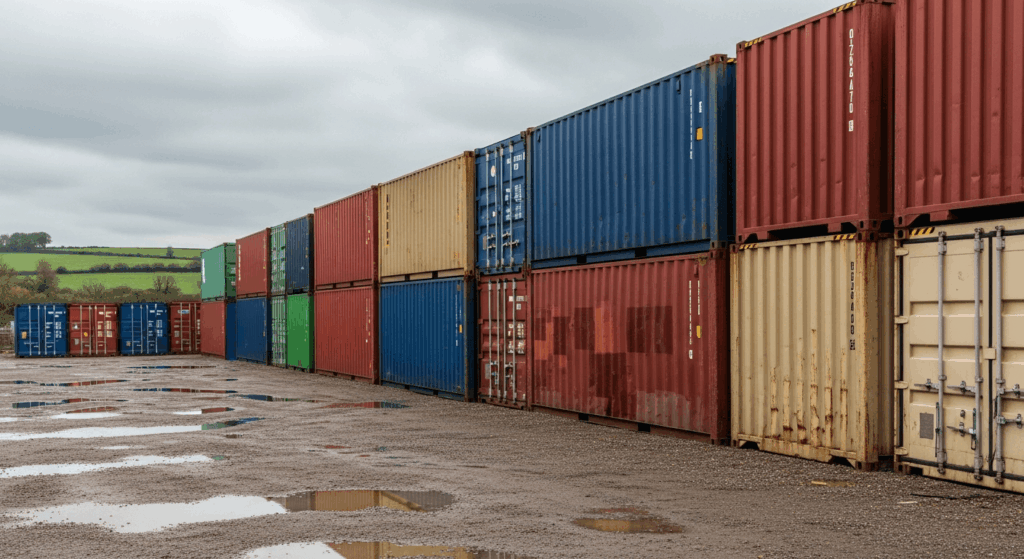
Not every container type is impacted in the same way, with pricing and availability varying depending on how each type is produced, sourced and supplied into the UK market.
Standard new containers (20ft and 40ft) are the most affected by these rising costs. High demand, large production volumes, and direct exposure to both steel tariffs and increased shipping costs mean these are likely to see the biggest price increases.
Specialist containers, such as high cube, open top, side opening, and tunnel containers face a different problem. They’re produced in smaller volumes, so UK stock levels are lower to begin with. Once current stock sells through, replacements take longer to arrive and come at a higher cost.
COSHH chemical store containers are a good example. These require specific ventilation systems, compliant storage features, and are often made to order. That means longer lead times, with higher prices on new builds.
Used containers are the least affected in the short term. They’re already in the UK and don’t carry the added cost of new shipping or tariffs.
How to Protect Your Budget
There are a few practical ways to manage costs while the market remains volatile.
- Buy from current stock. Shipping containers already at UK depots were procured at pre-increase rates. Once that stock sells, replacement units will come at a higher cost. If you know you need a container in the upcoming months, buying now can help you save money.
- Consider used containers. If condition matters less than function, used shipping containers are a cost-effective option. A wind and watertight container will handle most storage needs, while helping you avoid the higher costs affecting new stock.
- Look at long-term hire. If buying isn’t right for your situation, long-term container hire locks in a fixed monthly rate. You avoid the market volatility, keep your capital free for other things, and can upgrade or return the container when your needs change.
What to Expect in the Coming Months
The factors driving prices up aren’t going away any time soon. Steel tariffs remain in place, the Strait of Hormuz situation continues to disrupt supply chains, and freight rates show no sign of easing in Q2.
For UK buyers, that means the containers sitting in depots today are priced below what replacement stock will cost. Once current inventory clears, the new pricing will reflect the full weight of these increases. If you’re considering a purchase, whether new or used, acting sooner rather than later puts you in a stronger position.
Looking to buy a container before prices rise?
Take a look at our current stock and find the right option for your needs.
View Containers for SaleFAQs
Will container prices come down in 2026?
A significant drop is unlikely in the short term. The main cost drivers, including steel tariffs, shipping disruption in key routes and rising freight rates, are structural rather than temporary. Industry forecasts suggest pressure will continue into at least the second half of 2026, depending on how geopolitical conditions develop. For now, prices are more likely to hold or increase than fall.
How much will shipping container prices go up?
It depends on the container type and timing. New standard containers could see increases of around 10–20% as UK stock is replaced with units bought at higher manufacturing and shipping costs. Specialist containers may see larger increases due to lower production volumes and longer lead times. Used container prices may also rise as more buyers look for lower-cost alternatives.
Should I buy a new or used container right now?
Both options offer value while current UK stock lasts. New containers provide ISO certification, full lifespan, and more choice in condition and appearance. Used containers offer a lower upfront cost, immediate availability, and avoid the higher shipping costs affecting new stock. For basic storage, used is often the most cost-effective option. For conversions, site use or customer-facing applications, new containers are typically the better choice.